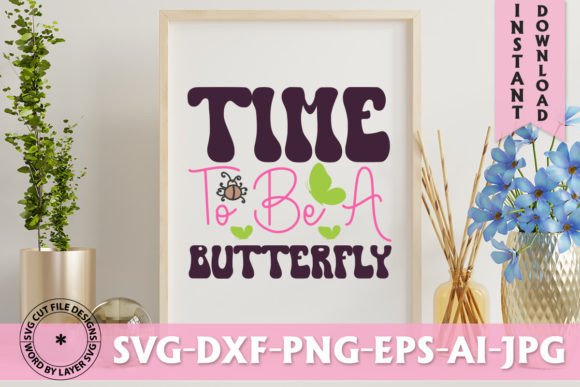
Reviewing Time to Be a Butterfly Retro Design
As an embroidery designer who has spent years digitizing patterns and testing them on everything from flimsy rayon to heavy denim, I approach every new machine embroidery design with a mix of curiosity and skepticism. We have all been there: you download a file that looks stunning on the screen, only to find it puckers the fabric or loses its charm once the needle hits the cloth. That is why I took a close look at Time to Be a Butterfly Retro Design. This is not just about aesthetics; it is about functionality, stitch quality, and how this asset translates into a tangible, sellable product.
The first thing that strikes you about this piece is its mood. It captures that specific, nostalgic warmth of retro typography mixed with organic, flowing shapes. The butterfly motif is not overly detailed, which is a blessing for embroiderers. Overly complex wings often result in thread breaks or messy jump stitches if the digitizing is poor. Here, the lines feel intentional and clean. For those of us creating T-Shirt Designs or custom apparel, this balance between visual interest and stitchability is crucial. It feels like a design that respects the medium, rather than forcing a graphic concept into a thread-based format without consideration for tension or density.
Real-World Application: The Tote Bag Test
To truly evaluate any embroidery project, you have to imagine it in a real-life scenario. I recently worked on a batch of canvas tote bags for a local boutique, and I immediately thought of how Time to Be a Butterfly Retro Design would perform in that context. Canvas is forgiving, but it requires a design that holds its shape without pulling the weave too tightly.
In this hypothetical application, the retro font provides a solid anchor, while the butterfly adds a whimsical touch that appeals to a broad demographic. Whether you are an Etsy seller looking to expand your spring collection or a hobbyist making a personalized gift for a friend who loves nature, this design fits seamlessly. It does not scream for attention; instead, it invites a closer look. That subtlety is what elevates a handmade product from a simple craft item to a boutique-quality piece. The layout suggests it would sit beautifully on the lower corner of a tote or centered on a chest pocket, offering versatility that many rigid designs lack.
Performance on Various Fabrics and Garments
One of the strongest aspects of this design is its adaptability across different textiles. Let us talk about sweatshirt embroidery. Fleece and French terry can be tricky because the pile of the fabric can swallow small details. However, the bold lines in this retro style tend to pop against textured backgrounds. If you are using a fill stitch for the butterfly wings, ensuring your underlay is sufficient will prevent the design from sinking into the fleece.
For baby embroidery, such as onesies or burp cloths, softness is paramount. You want to avoid high-density areas that feel scratchy against sensitive skin. While I do not have the exact stitch count for this specific file, the visual openness of the design suggests it is not overly dense. Still, I always recommend testing on scrap fabric first. Use a soft cut-away stabilizer to support the garment without adding stiffness. The retro aesthetic also works wonderfully for nursery decor, adding a vintage touch to pillow covers or blanket corners.
When it comes to caps and curved surfaces, caution is advised. The text element in Time to Be a Butterfly Retro Design needs to be checked for distortion when hooped on a cap frame. If the lettering is too long, it may wrap around the curve uncomfortably. In such cases, scaling down the design or choosing a smaller hoop size might be necessary. Always check how the thread colors interact with the cap material; dark hats require lighter threads for contrast, while white hats can handle deeper, richer tones.
Technical Considerations for Digitizing and Stitching
Let us dive into the technical side. The product description notes that this is a DIGITAL DOWNLOAD ONLY and includes an SVG file with word-by-layer support and an EPS file. This is important for hybrid creators. If you are primarily an embroiderer, you likely need specific machine formats like PES, DST, or JEF. Since these are not explicitly listed in the provided files, you must confirm compatibility with your machine before purchasing. However, the inclusion of SVG and EPS makes this an excellent resource for multi-platform sellers. You can use the SVG for cutting vinyl heat transfers to pair with your embroidery, creating mixed-media custom apparel that stands out in a crowded market.
For pure embroidery use, pay attention to the stitch density. Retro designs often utilize satin stitch borders to define shapes. If the satin columns are too wide, they may snag or loop. A good practice is to run a test stitch-out on a similar fabric to your final product. Check for thread breaks, especially in the tighter curves of the butterfly wings. If you notice pulling, adjust your tension or switch to a higher-quality polyester thread, which has more strength than rayon.
Another critical factor is color selection. The retro vibe lends itself to muted, earthy tones or vibrant, contrasting palettes. Try mocking up the design in black and white first. If the design loses its definition without color, it may rely too heavily on hue rather than form. A strong embroidery file should hold its structural integrity regardless of the thread palette. This design appears to have clear separation between elements, which is a positive sign for clarity on dark fabrics.
Commercial Viability and Brand Consistency
For craft business owners and small shop product creators, consistency is key. Using a design like Time to Be a Butterfly Retro Design can help establish a recognizable brand aesthetic. It speaks to customers who value nostalgia, nature, and handmade quality. When listing items on Etsy or at craft fairs, the visual appeal of this design can significantly boost buyer engagement. It photographs well, which is essential for creating effective printable mockup previews and social media content.
However, always verify the licensing terms. Just because you have the file does not automatically grant you the right to sell finished items commercially. Ensure that the license included with the download permits commercial use for physical products. If you are selling digital embroidery file derivatives or modified versions, the rules may differ. Protecting your business means respecting intellectual property rights and understanding the scope of your usage rights.
Final Thoughts on Design Utility
In conclusion, Time to Be a Butterfly Retro Design offers a charming, versatile option for embroiderers looking to add a touch of retro flair to their projects. Its strength lies in its balanced composition, which avoids excessive density while maintaining visual impact. Whether you are stitching a tote bag design, embellishing a holiday gift, or creating an embroidered patch for a jacket, this design holds up well under scrutiny.
Remember to test on scrap fabric, choose the right stabilizer, and confirm file compatibility with your specific machine. By taking these practical steps, you can ensure that your finished product meets the high standards your customers expect. For designers and makers who value both aesthetics and functionality, this design is a worthy addition to your library of design assets. It is not just a graphic; it is a tool for creating meaningful, tactile experiences through the art of embroidery.