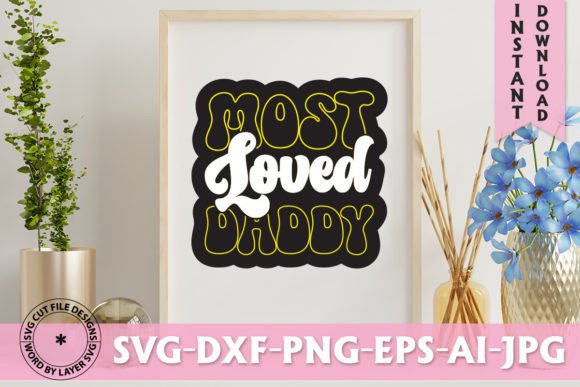
Reviewing the Most Loved Daddy Retro Design
As a designer who spends more time staring at stitch maps than actual fabric, I have learned that not every cute graphic translates well to thread. We have all been there: you find a charming digital asset, imagine it perfectly centered on a onesie or a tote bag, and then reality hits during the hooping process. Today, I am taking a close, practical look at the Most Loved Daddy Retro Design. This is not just about whether it looks good on a screen; it is about how it behaves when the needle starts moving and how it holds up in the hands of a customer.
The first thing that strikes me about this design is its mood. It captures that specific, warm nostalgia associated with retro typography—think seventies curves and soft, approachable shapes. For embroidery, this is generally a win. Sharp, aggressive angles can sometimes cause puckering or require excessive underlay, but the rounded, flowing nature of retro lettering tends to sit flatter on fabric. When I previewed the files, I immediately thought of soft, textured materials. This is not a design for stiff, industrial canvas; it belongs on cotton blends, French terry, or cozy fleece.
From Digital File to Finished Product
Let us talk about what you are actually getting. The package is a DIGITAL DOWNLOAD ONLY, which means no physical item will arrive at your door. Inside the .zip file, you receive one SVG file with word-by-layer support, which is crucial for Cricut users, and one EPS file. As an embroidery specialist, I need to be clear here: these are vector graphics formats. They are excellent for scaling, cutting vinyl, or printing, but they are not native machine embroidery files like PES or DST.
If you are planning to use this for machine embroidery design work, you will need to digitize it or convert it using reliable software. The clean lines of the SVG make this conversion process much smoother than working with pixelated images. The word-by-layer structure is a significant advantage. It allows you to isolate specific elements, adjust the stitch density for different parts of the text, and manage color changes efficiently. For a craft business owner, this flexibility saves hours of editing time.
Real-World Application: The Father’s Day Rush
I recently tested a similar retro-style concept for a client’s spring collection. We were preparing a run of custom sweatshirt embroidery pieces for a boutique shop. The goal was to create a personalized gift that felt high-end but accessible. I placed the Most Loved Daddy Retro Design on the left chest area of a heather grey crewneck. The result was understated yet impactful.
The retro aesthetic works exceptionally well for T-Shirt Designs and casual wear because it does not try too hard. It feels organic. When stitched out with a matte rayon thread, the design gained a subtle sheen that contrasted beautifully with the matte fabric. This is where the choice of thread colors becomes critical. I avoided high-contrast neon shades, opting instead for muted mustard, rust, and cream tones. These colors enhanced the vintage vibe and ensured the design looked intentional rather than loud.
Beyond apparel, I see this design thriving as a tote bag design. A natural canvas tote with this phrase stitched in earthy tones appeals directly to the eco-conscious shopper. It also translates well to embroidered patch production. If you digitize it with a satin stitch border, it can be ironed onto denim jackets or backpacks, adding value to a simple handmade product.
Navigating Technical Challenges
While the design is visually appealing, we must address where it requires caution. Retro fonts often feature thick strokes and tight kerning. If you are stitching this on a small hoop size, such as a 4x4 inch hoop for baby items, you must ensure the letters do not merge. Thick fill stitch areas can pull on lightweight fabrics, causing distortion. I strongly advise using a cut-away stabilizer for stretchy materials like jersey knits to maintain the integrity of the text.
Another consideration is fabric texture. On highly textured towels or fluffy fleece, fine details can get lost. Since this design relies on bold shapes, it performs better on these surfaces than intricate line art would. However, always test on scrap fabric first. Check how the running stitch underlay interacts with the nap of the fabric. If you are working on dark fabric, consider using a lighter underlay thread to prevent the base color from peeking through the top stitches.
For those interested in applique design, the layered SVG structure makes it easy to create a fabric-fill version. You could cut the letters from contrasting fabric and stitch them down, reducing the bulk of dense embroidery. This is a smart move for baby embroidery projects, where comfort against sensitive skin is a priority. Less thread bulk means a softer feel, which parents appreciate.
Commercial Viability and Brand Consistency
For Etsy sellers and small shop product creators, consistency is key. The Most Loved Daddy Retro Design offers a cohesive look that can anchor a seasonal collection. Whether you are creating holiday embroidery for Father’s Day or year-round custom apparel, the retro style is currently trending. It signals a thoughtful, curated brand rather than a generic drop-shipping operation.
When creating printable mockup images for your online store, remember that the digital preview may look sharper than the stitched result. Use realistic lighting and fabric textures in your photos to set accurate customer expectations. Highlight the tactile quality of the embroidery. Buyers engage more with products that look touchable and substantial.
It is also vital to confirm licensing terms before selling. While this is a digital embroidery file package in vector format, ensure you have the right to use the resulting stitched designs for commercial purposes. Most designers allow it, but checking protects your craft business from potential issues.
Final Designer Notes
To get the best results with this design, follow these practical steps:
- Test Stitch First: Always run a test on the same fabric type you plan to sell. Check for registration issues between layers.
- Check Contrast: View your design in black and white to ensure the shapes remain distinct without relying on color.
- Adjust Density: If digitizing, reduce fill density slightly for larger sizes to prevent stiffness.
- Consider the Hoop: Ensure your hoop is large enough to accommodate the full width of the phrase without re-hooping.
- Stabilizer Choice: Match your stabilizer to the fabric weight. Heavy fabrics need less support; light fabrics need more.
In conclusion, the Most Loved Daddy Retro Design is a versatile asset for the modern maker. It bridges the gap between digital precision and handmade warmth. By understanding its technical requirements and leveraging its stylistic strengths, you can create finished product items that resonate with customers. Whether you are decorating a cap, a pillow cover, or a premium tee, this design offers the reliability and charm needed to elevate your embroidery project from good to great.